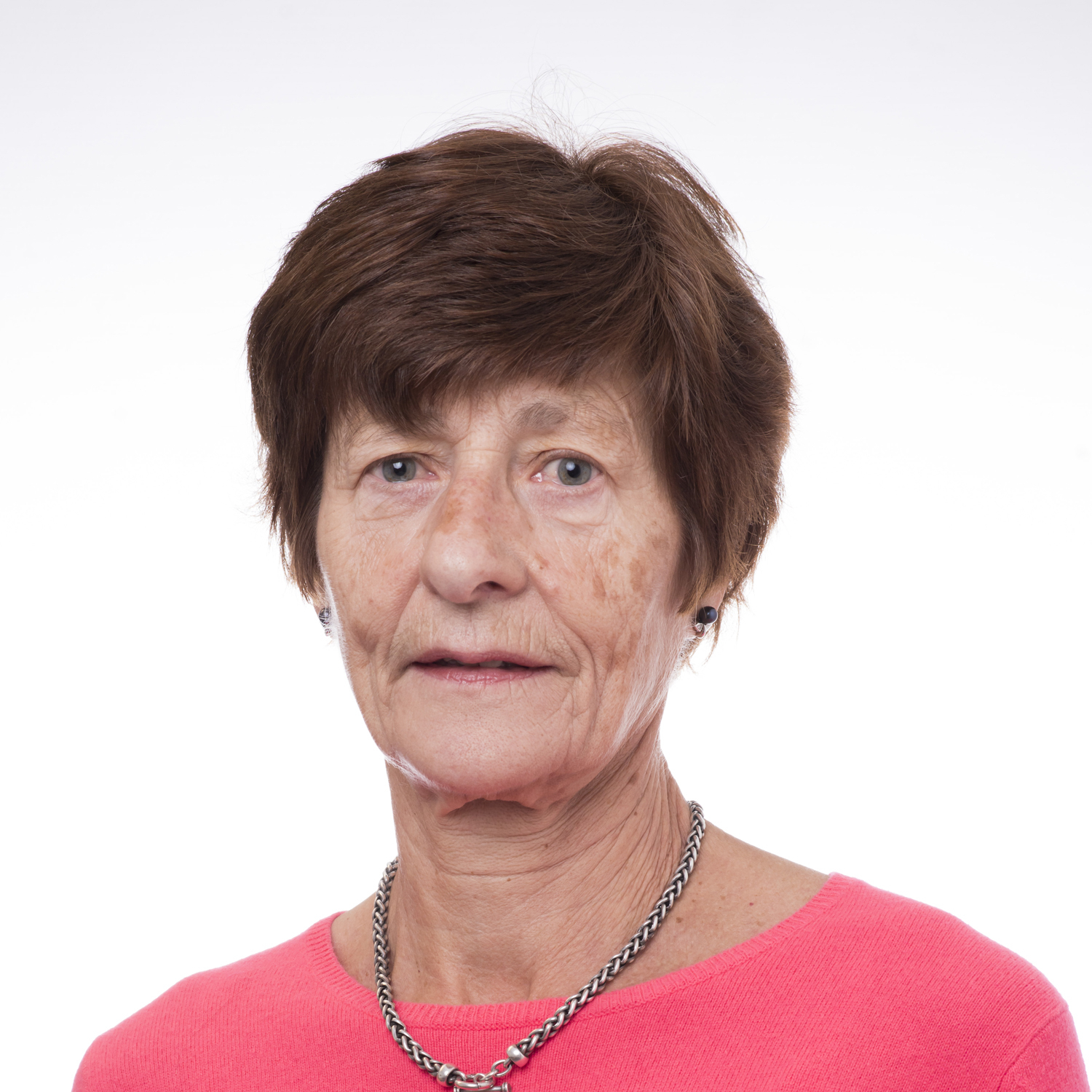
Rasmussen, Sofus; Strittmatter, Anna-Maria & Skirstad, Berit
(2024).
Institutional work as response to institutional complexities in hybrid elite sport and sport for all organizations.
European Sport Management Quarterly.
ISSN 1618-4742.
24(6),
s. 1298–1320.
doi: 10.1080/16184742.2024.2309064.
Fulltekst i vitenarkivVis sammendrag
Research question: This study aimed to examine how actors across different organizational levels respond to institutional complexity when facilitating elite sport and sport for all. By applying institutional work to understand responses to institutional complexity better, we examined the individual actors’ organizational roles and why and how they transformed the complexity in performing day-to-day work. Research methods: Data were collected in a bottom-up approach using qualitative focus groups and in-depth interviews. 149 representatives within Norwegian sport organizations contributed to the study, including coaches, club managers, directors, managers in national sport organizations, and the president of the Norwegian Olympic and Paralympic Committee and Confederation of Sports (NIF) Results and findings: Institutional complexity is differently characterized at the different organizational levels. One common issue across levels is that the institutional complexity of sport for all and elite sport is seen as challenging, especially in the local sport clubs where institutional logics turn into day-to-day activity. The main source of the challenge is unifying the youth players and practitioners’ different skills and ambitions, which propagates upwards in the organization. How actors respond to complexity varies within the organizational levels and the different sports. Tensions stemming from complexity are often neglected by the political argument of ‘the trickle down and up effects’, which to a considerable extent lacks empirical evidence. Implications: We recommend local sport managers prioritize expectation management to counteract a conflict of interests between institutional logics. It is necessary that national governing bodies better align their policies with the interest and organizational capacity of local clubs.
Skirstad, Berit & Kristiansen, Elsa
(2024).
Volunteers at mega and major events – a review.
I Solberg, Harry Arne; Storm, Rasmus K. & Swart, Kamilla (Red.),
Research handbook on major sporting events.
Edward Elgar Publishing.
ISSN 9781800885646.s. 317–331.Fulltekst i vitenarkiv
Strittmatter, Anna-Maria; Hanstad, Dag Vidar & Skirstad, Berit
(2021).
Facilitating Sustainable Outcomes for the Organization of Youth Sports through Youth Engagement.
Sustainability.
13(4).
doi: 10.3390/su13042101.
Fulltekst i vitenarkivVis sammendrag
The aim of this study was to explore how a youth sport development programme in connection with a major event may facilitate sustainable outcomes for the organization of youth sports in Norway. The context of the study involved the Norwegian Olympic and Paralympic Committee and Confederation of Sports’ initiative to increase young people’s engagement within Norwegian organized sports. The result of the initiative was the Young Leaders Programme (YLP) in connection with the 2016 Lillehammer Youth Olympic Games. Young people’s perceptions of the YLP, as well as how these perceptions relate to its implementation, are evaluated to determine the extent to which the programme may make a difference to sustainable youth engagement in organized sports. Qualitative data were generated through interviews with 16 YLP participants, aged 16–20, and five implementing agents. Applying the framework of processes affecting sustainability, the study shows how certain forms of sustainability can be enhanced while constraining other forms at the same time. The findings highlight that project design and implementation play a more crucial role in creating organizational sustainability than in creating individual sustainability. Furthermore, we were able to reveal that the engagement of young people in sport events as volunteers fosters individual sustainability, of which sport organizations and sporting communities should take advantage by providing arenas where young people can re-engage in sport organizations and thus contribute as change agents to a sustainable organization for youth sports.
Sogn, Hanne Elisabeth; Skirstad, Berit & Strandbu, Åse
(2021).
Ytre press, indre driv?: En analyse av Norges idrettsforbunds arbeid med å endre kjønnsbalansen i organisasjonen (1971 til 2020).
I Tjønndal, Anne (Red.),
Idrett, kjønn og ledelse.
Fagbokforlaget.
ISSN 9788245035353.s. 245–263.Fulltekst i vitenarkiv
Hansen, Per Øystein; Skirstad, Berit & Andersen, Svein S
(2021).
Leading and Organising German Elite Biathlon.
I Andersen, Svein S; Hansen, Per Øystein & Houlihan, Barrie (Red.),
Embedded Multi-Level Leadership in Elite Sport.
Routledge.
ISSN 9780367552770.s. 101–118.
doi: 10.4324/9781003092728-7.
Fulltekst i vitenarkiv
Wohlfart, Olivia; Adam, Sandy; García-Unanue, Jorge; Hovemann, Gregor; Skirstad, Berit & Strittmatter, Anna-Maria
(2020).
Internationalization of the Sport Management Labor Market and Curriculum Perspectives: Insights From Germany, Norway, and Spain.
Sport Management Education Journal.
ISSN 1938-6974.
14(2),
s. 129–141.
doi: 10.1123/smej.2019-0046.
Fulltekst i vitenarkivVis sammendrag
This study applies “Europeanness” to the analysis of internationalization in the sport management labor market and which changes this trend necessitates for sport management curricula. The authors employed an analysis of 30 semistructured interviews with key informants from Germany, Norway, and Spain. The results reveal various effects of internationalization on the sport sector and highlight the richness and diversity in the three countries. Sport management graduates need to possess a diverse set of competencies for successfully starting their careers. In addition to subject-specific knowledge, generic competencies such as the ability to work in a team, being able to communicate in diverse languages, and having intercultural skills are important. The article discusses knowledge of international sport organizations, their governance, global trends, and intercultural and language competencies, as well as international sport event management as identified themes and proposes specific curriculum changes to promote educational outcomes of sport management programs.
Skirstad, Berit & Kristiansen, Elsa
(2017).
Indirect Volunteers and Application of the Volunteer Cube: A Framework for International Sport Volunteering?
I Benson, Angela M & Wise, Nicholas (Red.),
International Sports Volunteering.
Routledge.
ISSN 9781138697775.s. 122–141.
doi: 10.4324/9781315511818-7.
Fulltekst i vitenarkiv
Strittmatter, Anna-Maria & Skirstad, Berit
(2017).
Managing football organizations: a man’s world? Comparing women in decision-making positions in Germany and Norway and their international influence: a contextual approach.
Soccer and Society.
ISSN 1466-0970.
18(1),
s. 81–101.
doi: 10.1080/14660970.2014.980733.
Fulltekst i vitenarkiv
Skirstad, Berit
(2017).
Omreisende frivillige : bitt av basillen.
I Hanstad, Dag Vidar & Lesjø, Jon Helge (Red.),
Ungdoms-OL på Lillehammer: Barneskirenn eller olympisk innovasjon?.
Akilles forlag.
ISSN 9788272862564.s. 113–135.Fulltekst i vitenarkiv
Skirstad, Berit; Parent, Milena & Houlihan, Barrie
(2017).
Young people and sport: from participation to the Olympics – introduction to the special issue.
Sport in Society: Cultures, Commerce, Media, Politics.
ISSN 1743-0437.
20(1),
s. 1–6.
doi: 10.1080/17430437.2015.1124560.
Fulltekst i vitenarkivVis sammendrag
The aim of this paper is to provide a context for the contributions which follow in this special issue. Attention is drawn to the range of possible motives for the increase in interest in youth sport evinced by a selection of major stakeholders including international sport federations, domestic federations and event organizers. The paper draws attention to the changing relationship between young people and sport where the former are seen increasingly as a resource to help meet the organizational objectives of the latter. The paper concludes with a summary of, and commentary on, the nine papers in the special issue.
Kristiansen, Elsa; Strittmatter, Anna-Maria & Skirstad, Berit
(2016).
Stakeholders, challenges and issues at a co-hosted youth olympic event: Lessons learned from the European Youth Olympic festival in 2015.
International Journal of the History of Sport.
ISSN 0952-3367.
33(10),
s. 1152–1168.
doi: 10.1080/09523367.2016.1238822.
Fulltekst i vitenarkivVis sammendrag
The 12th European Youth Olympic Festival (EYOF) was arranged in
Austria and Liechtenstein in January 2015. By using a stakeholder
framework, the study aims to: (a) identify and differentiate between
primary and secondary stakeholders based on their level of influence
in planning, implementation and impact of the event; and (b) analyze
the challenges and issues caused by the co-hosting. Qualitative data
stemming from interviews, observations and document analysis
indicate that EYOF is a less formalized event with a scaled down
budget. The local stakeholders turned out to have most to gain and
were willing to pay for such an event. Therefore, the Organizing
Committee involved local sponsors, companies and communities,
who became core or primary stakeholders, whereas the usual IOC core
stakeholders played a reduced role. Major challenges in co-hosting
were the coordination and administration of a border, two currencies,
transportation and accommodation. EYOF as an international event
might not have international influence, but it may have a sustainable
impact on the communities due to the co-host. This implies that cohosting
is a good model for future Olympic hosts if one wants to
attract smaller countries, and have the benefits of cost-reduction,
strengthening the community and cross-border relations.
Ferrand, Alain & Skirstad, Berit
(2015).
The volunteers' perspective.
I Parent, Milena & Chappelet, Jean-Loup (Red.),
Routledge handbook of sports event management.
Routledge.
ISSN 9780415858649.s. 65–88.
doi: 10.4324/9780203798386-4.
Fulltekst i vitenarkiv
Kristiansen, Elsa; Skirstad, Berit; Parent, Milena & Waddington, Ivan
(2015).
'We can do it': Community, resistance, social solidarity, and long-term volunteering at a sport event.
Sport Management Review.
ISSN 1441-3523.
18(2),
s. 256–267.
doi: 10.1016/j.smr.2014.06.002.
Fulltekst i vitenarkivVis sammendrag
Much research on volunteers has focused on who the volunteers are, and what motivates them on an individual level. This study, however, aims to contextualize the long-term commitment found in a whole community of volunteers and to explain this pattern of collective volunteering not in terms of individual motivations but in terms of broader social processes. Data gathered from interviews with volunteers in Vikersund, Norway, and the analysis of local and national press coverage in the years leading up to the 2013 World Cup in Ski flying in Vikersund suggest that long-term volunteering can be understood in terms of (i) a high level of social integration (socialization, institutionalization); (ii) the creation of a collective identity focused around the ski flying hill; and (iii) the maintenance and reinforcement of strong community identity and social solidarity by local resistance to the perceived hostility of outside organizations. This focus on the broader community/social processes has implications for researchers examining sport event volunteers as well as managers of recurring sport events wishing to retain volunteers.
Skirstad, Berit
(2014).
Er kvinner underrepresentert i norsk idrettsledelse? : utviklingen de siste 30 år.
I Lippe, Gerd von der & Hognestad, Hans K (Red.),
Kjønnsmakt i idrett og friluftsliv.
Novus Forlag.
ISSN 9788270997930.s. 215–237.Fulltekst i vitenarkiv
Wollebæk, Dag; Skirstad, Berit & Hanstad, Dag Vidar
(2014).
Between two volunteer cultures: Social composition and motivation among volunteers at the 2010 test event for the FIS Nordic World Ski Championships.
International Review for the Sociology of Sport.
ISSN 1012-6902.
49(1),
s. 22–41.
doi: 10.1177/1012690212453355.
Fulltekst i vitenarkivVis sammendrag
This paper argues that a reflexive, late modern volunteer culture coexists with a collectivist, traditional one at major sporting events. Those who regularly volunteer at such events and are affiliated with organized sport tend to be older and male, and have higher incomes. Those who are volunteering for the first time and are unaffiliated with organized sport resemble reflexive volunteers to a greater extent: they tend to be younger and female, and their incomes are lower than those of regular sports volunteers. A factor analysis identified sports interest, social motives and qualification/work-related motives as three motivational dimensions for volunteering at sporting events. The first two intrinsic dimensions were more important to event regulars and those affiliated with organized sports. Building qualifications and work-related experience were more important motives for first-timers and unaffiliated volunteers, indicating that these volunteers view event volunteering as an appropriate way of investing in social and human capital. The data come from an Internet-based survey (n=800, response rate 77) conducted prior to the 2010 test event for the FIS Nordic World Ski Championships in Oslo, Norway.
The theoretical framework of Hustinx and Lammertyn on reflexive and traditional styles of volunteering
is used to examine the differences between female and male volunteers at a sport event.
Our study of the Nordic Skiing World Cup 2010 is an online-study involving pre- and post-event questionnaires.
There were 659 respondents who answered both the questionnaires, a response rate of
63%. Our findings confirm the results from an earlier study by Downward Lumsdon, and Ralston
(2005) that a major reason for women to volunteer is to improve their social capital and to
become involved in useful networks. Motives were also examined in relation to membership of
the sport club and/or history of previous volunteering. Men scored more highly on external and
intrinsic motives. The data show that women to a lesser degree were members of a sport club and
had less previous experience of volunteering at events than the men. The sport event seems to be
a meeting place between traditional volunteers, dominated by males who are members of sport
clubs with previous experience from other events, and the late modern volunteer culture which
characterizes younger females.
Waddington, Ivan; Chelladurai, Packianathan & Skirstad, Berit
(2013).
CSR in sport : who benefits?
I Paramio-Salcines, Juan; Babiak, Kathy & Walters, Geoff (Red.),
Routledge handbook of sport and corporate social responsibility.
Routledge.
ISSN 9780415783057.s. 35–51.
doi: 10.4324/9780203747537.ch2.
Fulltekst i vitenarkiv
Skirstad, Berit
(2012).
Kjønn utgjør en forskjell.
I Hanstad, Dag Vidar (Red.),
Ski-VM 2011 : planlegging og gjennomføring.
Akilles forlag.
ISSN 9788272862328.s. 181–204.Fulltekst i vitenarkiv
Skirstad, Berit; Waddington, Ivan & Säfvenbom, Reidar
(2012).
Issues and problems in the organization of children’s sport: A case study of Norway.
European Physical Education Review.
ISSN 1356-336X.
18(3),
s. 309–321.
doi: 10.1177/1356336X12450790.
Fulltekst i vitenarkivVis sammendrag
The focus of this article is on the organization of children’s sport in Norway. More specifically, the paper sets out to examine (i) the changing pattern of relationships, and in particular the changing balance of conflict and cooperation, between the several organizations with responsibility for children’s sport, and (ii) how sport for children is regulated in order to protect children against the dangers associated with competitive pressures, overspecialization and burnout. These questions are answered by tracing the key policy changes and initiatives in relation to children’s sport. With reference to the organization of children’s sport, the ideological struggles between schools and sport organizations over the nature and objectives of sport and physical activity are traced from the 1950s through to recent attempts to promote an Active Sports policy, which represent possible partnerships between several governmental ministries (culture, health and education), schools, and sport clubs. With reference to protecting children against competitive pressures and early overspecialization, the article traces the development from the first advisory guidelines for children’s sporting participation through to mandatory regulations and finally to the recognition of children’s rights in sport.
Skirstad, Berit
(2011).
Barneidrett som politikk og praksis.
I Hanstad, Dag Vidar; Breivik, Gunnar; Sisjord, Mari Kristin & Skaset, Hans B. (Red.),
Norsk Idrett - Indre spenning og ytre press.
Akilles forlag.
ISSN 9788272862281.s. 33–51.Fulltekst i vitenarkiv
Skirstad, Berit & Chelladurai, Packianathan
(2011).
For 'Love' and Money: A Sports Club's Innovative Response to Multiple Logics.
Journal of Sport Management.
ISSN 0888-4773.
25(4),
s. 339–353.
doi: 10.1123/jsm.25.4.339.
Fulltekst i vitenarkivVis sammendrag
his article builds on prior theory and research on institutional logics and shows how a multisports club changes during its organizational life from an all amateur or voluntary logic to embody multiple logics simultaneously with different subunits being aligned with different organizational fields. The emergence of the professional logic for elite soccer in the presence of a volunteer logic caused a change in the structure of the club whereby all the units in the club became economically and legally autonomous. Soccer was divisionalized into soccer for everybody and soccer for the elite. The creation of a shareholding company and the use of an investment company which introduced the commercial logic were the next steps. This paper extends the literature by suggesting that different and opposing institutional logics such as the amateur, the professional, and commercial logics can coexist within a multisports club or, to put it another way, that the multisports club may belong to several organizational fields.
Ottesen, Laila; Skirstad, Berit; Pfister, Gertrud & Habermann, Ulla
(2010).
Gender relations in Scandinavian sport organizations : a comparison of the situation and the policies in Denmark, Norway and Sweden.
Sport in Society: Cultures, Commerce, Media, Politics.
ISSN 1743-0437.
13(4),
s. 657–675.Fulltekst i vitenarkivVis sammendrag
This essay examines the under-representation of females on executive boards in sport in the Scandinavian countries at all levels except the sports club. Hitherto, there has been no comparative research at all in Scandinavia on this subject. The explanations of this under-representation are linked to individual actors as well as organization-centred perspectives. The similarities and differences in Denmark, Norway and Sweden are explained in the light of gender policy in society at large and within the respective sports organizations. This gives plausible explanations for why female Danish sports leaders are less concerned with equality questions than their male counterparts. This is different to the situation in Sweden and Norway where women are more concerned with equality questions than the men. Equal opportunity plans in Sweden and quota schemes in Norway seem to have had an influence on attitudes towards equal opportunities in sports organizations.
Skirstad, Berit
(2009).
Gender policy and organizational change : a contextual approach.
Sport Management Review.
ISSN 1441-3523.
12(4),
s. 202–216.Fulltekst i vitenarkivVis sammendrag
The purpose of this article is to draw upon Pettigrew's contextualist approach to organizational change to examine the implications of gender policy on the imbalance between female and male board members in sport organizations. The paper is based on a case study of the General Assembly (GA) of Sports in Norway over more than three decades. The central focus is on the evolution of gender equality as expressed in changes in the relevant statutes of the sport organization, the preparatory work for the changes, the environment in which the changes have occurred, and the process itself with its critical incidents and the behaviour of key actors. The period of study is divided into three according to which approach was mainly used for promoting equality: equal rights (1971¿1984), positive action (1984¿1994), and gender mainstreaming (1994¿2007). The study facilitates an understanding of how change has been achieved. Evolutionary or incremental change has impacted organized sport resulting in a more equal gender balance, with the proportion of women delegates increasing from 8% to 39% in the General Assembly of Sports. Despite this considerable development, a proposal for a 40% quota of women in all sport organizations was turned down by the Executive Board and not put before the General Assembly in 2007. It is suggested that Pettigrew's contextualistic approach helps in seeing the processes of change more clearly, and who are the key-persons and incidents involved in the process.
Gray, Dianna; Madella, Alberto; Puronaho, Kari; Shilbury, David & Skirstad, Berit
(2008).
Sport Mangement.
I Borms, Jan (Red.),
Directory of sport science / Jan Borms (ed.).
ICSSPE.
s. 293–311.Fulltekst i vitenarkiv
Waddington, Ivan & Skirstad, Berit
(2008).
Theoretical Approaches to Change in Sports Organizations [Editorial].
European Sport Management Quarterly.
ISSN 1618-4742.
8(4),
s. 311–313.Fulltekst i vitenarkiv
Skille, Eivind Å.; Skirstad, Berit & Skirstad, Berit
(2007).
Understanding sport participation - A cross level analysis from the perspectives of neo-institutionalism and Bourdieu,
Understanding sport participation - A cross level analysis from the perspectives of neo-institutionalism and Bourdieu.
Elsevier.
s. 37–59.Fulltekst i vitenarkiv
Waddington, Ivan; Loland, Sigmund & Skirstad, Berit
(2006).
Introduction. Pain and injury in sport,
Pain and injury in sport : social and ethical analysis.
Routledge.
s. 1–13.Fulltekst i vitenarkiv
Loland, Sigmund; Skirstad, Berit & Waddington, Ivan
(2006).
Three approaches to the study of pain in sport,
Pain and injury in sport : social and ethical analysis.
Routledge.
s. 49–62.Fulltekst i vitenarkiv
Goksøyr, Matti; Loland, Sigmund; Skirstad, Berit & Waddington, Ivan
(2006).
Pains and strains on the ice : some thoughts on the physical and mental struggles of polar adventurers,
Pain and injury in sport : social and ethical analysis.
Routledge.
s. 76–88.Fulltekst i vitenarkiv
Cingiene, Vilma; Puronaho, Kari; Barreau, Gerard; Costa, George; Hovemann, Gregor & Skirstad, Berit
[Vis alle 7 forfattere av denne artikkelen](2006).
Sport Mangement,
The Thematic Network Project AEHESIS. Report of the Third Year.
The Institute of European Sport Development & Leisure Studies, German.
s. 171–200.Fulltekst i vitenarkiv
Waddington, Ivan; Loland, Sigmund & Skirstad, Berit
(2006).
Ethical problems in the medical management of sport injuries : a case study of English professional football,
Pain and injury in sport : social and ethical analysis.
Routledge.
s. 182–199.Fulltekst i vitenarkiv
Ottesen, Laila; Skirstad, Berit & Habermann, Ulla
(2005).
"It will solve itself(?) - On the attitudes of Scandinavian sport managers towards equal opportunities,
Hofmann, A.R. & Trangbæk, E. (Eds.) International Perspectives on Sporting Women in Past and Present. A Festschrift for Gertrud Pfister.
Institutet of Exercise and Sport Sciences, University of Copenhagen, D.
s. 189–213.Fulltekst i vitenarkiv
Skirstad, Berit & Seippel, Ørnulf Nicolay
(2002).
Norske idrettslag : oversikt og utfordringer Norwegian sport clubs : overview and challenges.
I Seippel, Ørnulf Nicolay (Red.),
Idrettens bevegelser : sosiologiske studier av idrett i et moderne samfunn.
Novus Forlag.
ISSN 9788270993512.s. 229–254.Fulltekst i vitenarkiv
Skirstad, Berit
(2001).
Investment in women's sport - pays off? : a Norwegian experience.
?.
28(3),
s. 1–17.Fulltekst i vitenarkiv
Skirstad, Berit
(2000).
Testy zenstvi pri vrcholnych sportovnich soutezich - ano ci ne?Cesky Olympijsky vybor.
?.
21,
s. 44–46.Fulltekst i vitenarkiv
Skirstad, Berit
(2000).
More Opportunities for Women in Top-Level Sport both as Leaders and Athletes.
?.
4(1),
s. 41–52.Fulltekst i vitenarkiv
Gray, Dianna; Madella, Alberto; Puronaho, Kari; Shilbury, David & Skirstad, Berit
(2007).
Directory of Sport Science.
ICSSPE.
Fulltekst i vitenarkiv
Loland, Sigmund; Skirstad, Berit & Waddington, Ivan
(2006).
Pain and injury in sport : social and ethical analysis.
Routledge.
ISBN 9780415357043.288 s.Fulltekst i vitenarkiv
Loland, Sigmund; Skirstad, Berit & Waddington, Ivan
(2006).
Pain and Injury in Sport: Social and Ethical analysis.
Routledge.
268 s.Fulltekst i vitenarkiv
Skirstad, Berit & Kristiansen, Elsa
(2016).
Event gypsies - who, what and how.
Fulltekst i vitenarkiv
Skirstad, Berit; Doherty, Alison & Girginov, Vassil
(2013).
Introduction to special issue.
European Sport Management Quarterly.
ISSN 1618-4742.
13(1),
s. 1–4.
doi: 10.1080/16184742.2012.750179.
Fulltekst i vitenarkiv
The purpose of this paper is to explain the presidential election process of the Norwegian Olympic and Paralympic Committee and Confederation of Sports (NOC) in 2007. Stakeholder and network theory is used as the theoretical framework in order to understand the election process and explore the power play between the different stakeholders in sport in relation to have their candidate elected as president. The stakeholder picture is multifaceted and consists of several formal and informal stakeholders, of whom some are internal and some are external.The most influential stakeholders are the sport federations (55) and the regional sport associations (19), and each group has 75 votes. In addition comes the executive board of the NOC. Stakeholder theory is one important example of a theory that develops tools to assess the relative importance of different constituents and to find rational strategies for balancing the attention given to their demands (Mitchell, Agle, & Wood, 1997). Power as conceptualized by Mitchell et al. (1997) refers to abilities to influence the outcome according to the stakeholders? desires. Even within a stakeholder group not all members are homogeneous. Stakeholders lacking sufficient power to influence the organization demonstrated that it may still be able to influence through forming an alliance with another powerful stakeholder (Frooman, 1999). Method: Qualitative case-study of observations at the GA for three days and field notes, analysis of news paper clippings, and seven semi-structured retrospective interviews with the key-actors (spokesperson for the districts, the sport federations, the leader of the nomination committee, two vice-presidents, the elected president, and the major opponent). The interviews were tape-recorded and written down and analysed according to power, urgency and salience. Results: The Nomination Committee planted a seed for a female president. This started the chase by the big federations to find a ?heavy? candidate to substitute her. They did not succeed because the downfall of the big federations? power was caused by not playing by the democratic rules, too many dirty stories about opponents, arrogance, and failure of organizing fraction meetings. A troika (president and two vice-presidents) united just before the finish line by negotiations on divisions of power and work areas as well as salary. The theoretical framework gave more in-depth knowledge of the election process and how the different stakeholders operated.
Skirstad, Berit
(2008).
European Sport Management Association- Resent development in Sport Management - Strength and Weaknesses.
Fulltekst i vitenarkiv
Organizational change and adaptation have been central research issues in organizational literature (Greenwood & Hinings, 1993, 1996; Laughin, 1991) as well as in sport. Scholars have looked into changes in amateur sport organizations at the national level (Amis, Slack & Hinings, 2004; Hinings et al., 1996; Kikulis, 2000; Kikulis, Slack & Hinings, 1992, 1995; Stevens, 2006), and in professional sport franchises (Cousens, 1997; Cousens & Slack, 2005; O¿Brian & Slack, 2004). A central theme guiding these investigations is Greenwood and Hinings¿ (1988a, 1993, 1996) conception of archetypes in tracking and describing organizational change. While these efforts have provided great insights into the dynamics of organizational change in sport organizations, they were restricted to umbrella organizations in amateur sport and professional sport. The present study seeks to add to the literature by studying changes in a community sports club operating at the grass-roots level. The purpose of this case study is to track the changes in a multi-sport club and show how the archetype framework can be used in the analysis and description of the changes in the focal club. The case study approach adopted here offers the possibility of in-depth analysis and can also contribute to the development of theory. The focus of the case study is the Kongsvinger Sport Club (KIL) in Norway.
The purpose of this paper is to examine Norwegian gender policy as expressed in organizational statutes, how this policy has influenced gender representation in executive boards of sport organizations, and why and how this has changed. To understand the background to these changes it is necessary to examine the indirect external pressures arising from the ¿women¿s¿ coup in the municipal elections in 1971 and the demand for greater female representation in sport from the same period. The paper draws on longitudinal research based on observation of consecutive General Assemblies of Sports over a period of 27 years. The General Assembly of Sports is the highest formal decision-making forum for sport organizations in Norway, and that is where gender policy has been enacted. The Norwegian umbrella organization with all its underlying bodies operates predominantly within the non-profit or voluntary and public sector. As a base for analyses, Pettigrew¿s contextualist approach of organizational change, which is holistic, has been used. It includes the ¿what¿, ¿why¿ and ¿how¿ of change. The ¿what¿ or content of change refers to the area of transformation under study, here the introduction of the gender-paragraph in the umbrella organization of sports and its preparatory work. The ¿why¿ of change refers to the context, that is the environment where the changes have occurred, and this includes what Pettigrew refers to as ¿outer¿ and ¿inner¿ contexts. It is essential to analyse the outer and the inner environments in order to better understand the change process with its critical incidents, and the behavior of the key actors. The ¿how¿ or process of change refers to the various negotiations of the actors involved in the proposals for change. This framework helps us to understand the complexity of the process in relation to the pressures from the environment. The primary data source is observation of 11 General Assemblies of Sports in the years 1980 to 2007 and document analyses from 1971 until 2007. Supplementary data came from a quantitative leadership study from 2004 and a hearing on a sport policy document for 2007 - 2011. The results show female representation was discussed in seven General Assemblies before the statutes on gender were enacted in 1987, after being rejected in 1980. The first gender paragraph which was accepted in the statutes stated just that both genders had to be presented in the boards of the Norwegian umbrella organization, the sport federations and the regional sports bodies. This paragraph was amended in 1990, 1996, l999, and again in 2007. Change may involve a challenge to the dominant ideology, cultures, system of meaning and power relationships in the organization. This explains why change can be a long process. The results from the 2004 survey, as well as those from the hearing in 2007, help one understand the reasons why the more radical quotas of 40 % were never officially forwarded in the organization in 2007. Significant differences between women and men were detected in their attitudes towards gender equality. 45 % of the male and 26 % of the female sport leaders thought Norwegian sport has an adequate gender distribution. Variations according to age existed as well. The gender paragraph was once again amended. The changes in the organizations have been incremental, but undoubtedly there has been some movement towards greater gender equality since the gender paragraph was enacted.
Skirstad, Berit
(2007).
Changes in Sport Management at the Norwegian School of Sport Sciences.
Fulltekst i vitenarkiv
Skirstad, Berit
(2007).
Present and Future Model of Sport Management at the Norwegian School of Sport Sciences.
Fulltekst i vitenarkiv
Skirstad, Berit
(2006).
Historiske utfordringer og perspektiv for kvinnelige trenere.
Fulltekst i vitenarkiv
Skirstad, Berit
(2006).
Har forsømt seg. Norges Idrettsforbund har aldri gjort noe helhjertet forsøk på å få inn kvinnelige trenere.
Fulltekst i vitenarkiv
Skirstad, Berit
(2006).
Board members in sport organizations, eguality, representation and gender and age differences.
Fulltekst i vitenarkiv
Skirstad, Berit
(2005).
European Trends affecting Sport Management - National and European Perspectives.
Fulltekst i vitenarkiv
Skirstad, Berit
(2005).
Hvilke kompetanser trenger en sport manager? Fulltekst i vitenarkiv
Skirstad, Berit & Rimeslåtten, Anne Kristi
(2005).
Lederundersøkelsen 2004. Empirisk undersøkelse.
Fulltekst i vitenarkiv
Skirstad, Berit
(2005).
Organisasjonsendringer med utilsiktede konsekvenser.
Fulltekst i vitenarkiv
Skirstad, Berit
(2005).
Does organisational change foster unintended results? Fulltekst i vitenarkiv
Skirstad, Berit
(2004).
Crises in Norwegian Olympic Committee and Confederation of Sports - lack of trust and cooperation.
Fulltekst i vitenarkivVis sammendrag
The Norwegian Olympic Committee and Confederations of Sports (NOC) is in the midst of a crisis and an extraordinary general assembly was called for April 16-17, 2004. The co-operation between the public represented by the Ministry of Culture and Church to where sport belong, and the NOC has been tense. The President of NOC and its general secretary resigned February 17, 2004 because of the economic situation, a deficit of 4.4 million Euros (35.9 million NOK) and a negative own capital of 5.5 million Euro (NOK 45 million). The president has been in the job since 1999, and was re-elected in May 2003 for another 4 year period. He was a former Director of a big bank in Norway, and he was elected on the basis of having good control with the finances. The general secretary has also been there for the whole period. Such a situation has never happened before. In the beginning the scapegoat was the Minister of Culture and Church Affairs for not giving the NOC all the money they thought they were getting as a compensation of the value added tax, VAT. The administration had calculated with more than 3 million Euro extra from VAT in order to cover up for some of their expenses. The extraordinary general assembly was called upon after the sport district associations asked for it. The accounts for 2001, 2002 and 2003, documents prepared before the extraordinary general assembly and the report of the audit committee were studied and the extraordinary general assembly was studied. Informal talks with the representatives have added to the picture as well. In the interim period, the first vice-president a female was functioning as a president. This is the first time in history that the organization has had a female head. The immediate reaction by the functioning board was to save almost 2 million Euro (16 million NOK) each year for the next three years. The saving scheme that was announced after a month was 29.9 man labour year. In the discussion where to save the money some of the old conflicts come up to the surface. Sentralizing and professionalizing are development trends that have happened in the voluntary sector as a whole (Selle & Øymyr 1995), and the organized sport is no exception. This has resulted in a big bureaucracy in NOC, 90.6 persons employed inclusive 9.5 positions in top sport by March 1st, 2002 (Kultur- og kirkedepartementet 2003). The number of employees has almost doubled the last 13 years. The situation for NOC is serious, and in principle the organization is insolvent. The only reason why the organization can continue is that public grants make up for 80% of the budget. This implies that the ministry accepts that part of the money can be used to build up NOC’s own capital. This means that the NOC is much more tied to the priorities and the guidelines in the letter of award from the ministry. This situation is created because the expenses have been greater than the income for a long time. The administration has had too wide power of attorney, and loans for more than 1million Euros have been given to a sponsor firm, OnTarget, owned 20 % by the NOC without asking the board.
Sport represents the largest voluntary organization in Norway. The members of the Norwegian Olympic Committee and Confederation of Sports (NOC) equal approximately 40 % of the Norwegian population when one does not correct for double membership. The highest decision-making body in sport is the general assembly of sports organized every 4th year. Between the general assemblies of sport the executive board of NOC governs, and they shall see to the implementation of the decisions taken at the general assembly. An analysis of what happens at the general assembly can give us insight in who governs, who controls and who profits from the democratic system which the general assembly of sport represents. The document “Sports Politics 2003-2007” which pointsout the course of the NOC for the next 4 years, has been chosen to illustrate the case. Methods The document has been analysed from it first was sent on rehearsal to the parties who take part at the general assembly of sports. The comments (60) that were received from the parties as well as the final document have been analysed. The General Assembly itself in May 2003 was observed by four persons. The total members with voting rights were 161. Results The document “Sport Politics” treats 15 different themes, of which 11 were discussed in the general assembly. In all 44 different proposals were voted upon, of which 26 were approved, 10 sent on to the next executive board for further treatment and 7 were not passed. About half the proposals came from the special sport federations and the other half from the sport associations in the regions. Twice as many male as female representatives were responsible for the interventions. Discussion / Conclusions NOC claims to get its legitimating power from the sport clubs when it wants to demonstrate political power and democracy. Most people think democracy in sport means that the members in sport decide and that bureaucrats implement the decisions. This analysis shows that is a misleading conception. Specializing and professionalizing are developing trends in the whole voluntary sector [1] as in sport. Most of the tasks drawn up in the Sport Politics document are planned for the sport clubs, but they are not given the chance or being allowed to speak up, and they are not represented at the general assembly of sports. Can we then speak about democracy in sport?
Skirstad, Berit
(2004).
What are students looking for when they choose study field, and do the sport management study fulfil their needs.
Fulltekst i vitenarkiv
Skirstad, Berit
(2004).
Women's influence in Sport as Internal and External Stakeholders.
Fulltekst i vitenarkiv
Skirstad, Berit
(2004).
Sport Management at Norwegian University of Sport and Physical Education.
Fulltekst i vitenarkiv
Skirstad, Berit
(2004).
Democratisation of access to sport activities and sport organizations [both print and CD-rom] Démocratisation de l'accès aux activités et organisasionssportives.
Fulltekst i vitenarkiv
Norway is the best country in the world in which to be a woman, according to the Gender Development Index and Gender Empowerment Measure of the United Nations in 2004. Perhaps the stories from those who live there is not as nice as the statistics show. The concepts of gender and stakeholder theory will be outlined. Gender is especially difficult to deal with because everybody has experience and intimate knowledge of the subject (Alvesson & Billing 1997). Under- and over-sensitivity and gender are explained. Two reasons for studying sport organizations and gender are injustice and profitable management. Under-representation of women in sport organizations are focused, and the more the higher up in the hierarchy you climb. Stakeholder theory and gender are purposely tried to be put together in order to test if it possible. Are the women a stakeholder group of their own or are they just present in the other groups of stakeholders that are present in sport both as internal and external and formal and informal ones? In order to have the women as a relevant stakeholder group there need to be some homogeneity in terms of activity or attitude within gender, and there must be some differences between genders. Secondly, gender would need to contribute some prediction beyond what you can get from other stakeholders. The question is if it does that? The attributes of the stakeholders are studied in an attempt to categorize the different stakeholders. The examples in order to illustrate the theory are taken from Norwegian sport when the quotas were introduced.
Skirstad, Berit & Steen-Johnsen, Kari
(2004).
Refleksjoner fra ekstraordinaært idrettsting. Relections from extraordinary general assembly of sports.
Fulltekst i vitenarkiv
Skirstad, Berit
(2004).
Web-based questionnaire used on leadership and gender: selected advantages and barriers.
Fulltekst i vitenarkiv
Skirstad, Berit
(2004).
How Sport Management is organized in Norway.
Fulltekst i vitenarkiv
Skirstad, Berit
(2004).
Undersøkelse av tidligere KIF-studenter. Hvilket behov har en for denne type forskning? Investigation of earlier sport and culture students. Which demand exist for this type of research? Fulltekst i vitenarkiv
Skirstad, Berit & Steen-Johnsen, Kari
(2004).
Lederundersøkelsen 2004 Leadership survey 2004.
Fulltekst i vitenarkiv
Skirstad, Berit
(2003).
Le Modèle Norvegien Het Noorse model (Dutch).
?.
s. 4–8.Fulltekst i vitenarkiv
Skirstad, Berit
(2003).
Gender Mainstreaming im Sport : Alter Wein in neuen Schlauchen? Gender mainstreaming in sport : old wine on new bottles.
Fulltekst i vitenarkiv
The first students finished their undergraduate study of sport management at our university 15 years ago in 1987. It would be useful to know where the students work at the moment, and how well they feel that the university have prepared them for work .It is important to check for practicality and relevancy of the education (Weese 1995). The aims of the study were to 1) identify the motives why the students wanted to study sport management, 2) what extent are sport management graduates employed in various types of sport management occupations, 3) assess career outcomes on the completion of the sport management study programme, 4) provide insights on how the different subjects taught have had relevance for their work and 5) investigate if there seemsto be a relationship between the grades achieved and the jobs you get. Both primary and secondary data have been used. The primary data consist of three investigations at three different times. The first one was in 1991(N= 108) with a response rate of91.5 %, and the second in 1996 (N=207) with 79.9% also included the respondents from the first survey 5 years after. The third survey in 2003 where all the previous students are included (N=494) is in progress. Further we know that many of the studentswere already sport teachers when they started the study in sport management, and they took this study in order to be better equipped for the future in case they get tired of being a physical education teacher. A sport management occupation has to meet the following two criteria:1) linked to the organization and implementation of sports activities and 2) the main tasks and duties of the job consist of planning, organising, controlling and directing the daily work activities of a group of subordinates (ENSSHE 1997:9). The first investigation showed that almost one third was motivated for administrative work, a fourth would just have more possibilities, almost a fifth thought it was an exiting study and a tenth needed the study to have a bachelor degree as a physical education teacher. 62% answered that the study met their expectations, 34 % partly, just 1 % answered no, and 3% did not know. The ones who had administrative jobs were very satisfied with their job. The average age seem to differ some,with a tendency to have a lower average age for the students in attending the course in the more recent years. It is a larger share of the people working as sport managers to-day that mention that their motive to enter the study was a genuine interest in sport management than the others who were more involved in creating more possibilities if they did not like teaching or when they would get tired of it. Almost a fifth of the students in the first investigation mentioned that they were motivated to start this study by former sport management students or the coordinator of the study. Very many of the respondents had been active sportsmen or - women. A small tendency is seen that more among the teachers had been active on a higher performance level as national and Nordic, than among the sport administrators. Organization theory and leadership was the most relevant subject they were taught both according to the sport managers as well as the physical education teachers. The internships periodswere adequate according to 75% of the respondents, and one fifth of them claimed they were too short. This is in accordance with studies undertaken in the States (Cuneen 1992).
Skirstad, Berit; Kahrs, Nina & Miramagu, Nicholas
(2003).
Paralympics sport in Uganda.
Fulltekst i vitenarkiv
Skirstad, Berit; Hartmann-Tews, Ilse; Rulofs, Bettina & Leutkens, Sascha Alexandra
(2003).
The road from quotas to gender mainstreaming in the Norwegian umbrella organization for sport is a discourse from right.
Fulltekst i vitenarkivVis sammendrag
The question is if the use of quotas, positive actions and gender mainstreaming helps to abolish the under-representation of women in decision-making bodies in sport. The participation of women to the general assembly of sports, the highest decision-making body in Norway, was studied. The period was 1971- 2003 and cover 13 assemblies. The last 9 assemblies were observed. The lessons learned from the Norwegian experience is illustrated according to which equal treatment approach was used: Equal rights(1971-1984); positive action (1984-1994); and gender mainstreaming (1994- 2003). In all three periods, quotas has been central even when it failed to be accepted from the beginning. The evolution of the quota statement and the actions of the umbrella organization to increase female representation are described. The arguments for empowerment of women have changed from rights to difference and utility, and quotas seemed to increase the number of participating females.
Skirstad, Berit; Kahrs, Nina & Miramagu, Nicholas
(2003).
Paralympic sport in Uganda.
Fulltekst i vitenarkiv
Skirstad, Berit
(2002).
Successful european women report on their career development.
Fulltekst i vitenarkiv
Skirstad, Berit
(2002).
How to ensure progress through targets, quotas and other measurable objectives.
Fulltekst i vitenarkiv
Skirstad, Berit
(2002).
Problems of being a mother and sportsleader or sportswomen (athlete) at the same time.
Fulltekst i vitenarkiv
The answer to the question if women serve coffee as part of their role in sport politics, must be it depends upon the cultural context where you ask. Two examples illustrate this. The growth of women’s participation in sport politics is a post-war phenomenon. In the last 15 years gender and organizations are put on the agenda (Ackers 1990). Organizational theory has been “gender-blind”. The male values in the organization have been viewed as gender neutral. It was the men that researched the organizations where they were in charge. All research is value loaded and cannot escape being influenced by the history, life-situation and particular world view of the researcher. The Equal Opportunity act was passed in 1978 in society at large. In sport it was passed ten years afterwards, but at that time with the strange wording that there should be candidates/representatives of both genders. It was raised at the General Assembly of Sports in 1980, but failed. It was passed in 1987. Power is its own protection. To redress imbalances of power requires power. The powerful are not likely to give up their power without a struggle. Unless groups with little power can mobilize resources for this struggle, they have no chance of improving their power position. The situation is not quite hopeless, because the power of a group is not identical with the power of its members. Women talk about other things than men in the general assemblies in sport that I have studied in Norway. The men look upon the women’s topics of interest as marginal, but their own topics as central. Men talk longer and more about economy and elite athletes. Women talk about equality, sport for all and for children in the neighbourhood and of course their favourite topic equity. The FIH is one of the 2 International Olympic Sports Federations in the world with, firstly, a female president and, secondly, a far greater representation of women than the 10 per cent target set by the International Olympic Committee. In 1999, the figure for women with key roles within the FIH was 26 per cent; by 2001 it was nearly 40 per cent! Making invisible and make ridicule of are techniques used very effectively by many men by never referring to a proposal that you (a woman) have made, but refer to a man that later said something of the same. Make ridicule of some one is efficient for the purpose to shut that person up for later occasions. To maintain a competitive edge both within European business and in the global economy, strategic organizations are beginning to realize the economic significance of women as executives, investors, customers, and clients. It is time for inclusion also in sport. All actions should be taken into account simultaneously.  Equal treatment – ensuring that men and women are treated the same  Positive action –to redress disadvantage  Mainstreaming, the systematic integration through equal opportunities for women and men into systems, structures, institutions, programmes, policies and practices; into ways of seeing and doing (Rees 1998)
In the sport clubs in Norway the situation is that 17,5 % are female. Together there are 7570 ordinary sport clubs. More women are engaged in the North than e.g. in Oslo, which has the fewest. In addition comes the company sport clubs. In the sport councils, which are a gathering of all the sports clubs in the area. They are organized mainly to approach the government together, in the hope that together they are stronger. There are 11,7 % female leaders . Alltogether there are 315 sport councils. These last figures are from 2000 (NIF 2000:47) The figure of executive female board members in the sport federations are 28.8% The female athletes made up for 34.3 % of the athletes in Atlanta and 38.2 in Sydney. In the light of equality the women should have the same share of the decision-making power as of the athletes. Following the recommendations of the Study Commission of the IOC Centennial Olympic Congress in 1994, a Women and Sport Working Group was established in 1995. The Women and Sport Working Group should advice the IOC on suitable politics to be followed in this field. There are 40% men in this working group. Every time they have enlarged the number of women, they have extended the working group, so no men would have to leave the commission. Three years ago the first woman, Anita De Frantz, became vice-president in IOC executive board. She became one of the most loyal defenders of Samaranch. One can ask who are the women who enter as IOC-members? Most of them are recruited as former well known athletes. Among them there are also 3 royal persons. The athletes commission: (4 out of 19, 21%). In the executive board of the IOC there are just one women Gunilla Lindberg from Sweden (1 out of 15, 6.6 %) To me it is a little strange that IOC do not manage to follow their own recommendations with the 10% limit. In an interview with a Danish sport paper “ Idræt & ungdom” (Sport and Youth) this year, the IOC president Jacques Rogge proclaimed that in order to make the sport universal in 10-12 years 50% of the athletes shall be women. There will be introduced quotas (no numbers were mentioned) in connections with elections to leading positions. The two female athletes recieved the most votes, so they were elected for 8 years and the male for 4 years. What sanctions are used when the countries to not meet these requirements? The only one they would understand is probably money. The study of social inequality has been of central interest in the social sciences. Questions like who get what and why. The focus centers on issues like dominance and control over the social agenda. The social relations are historicallly produced, socially contructed and culturally defined to serve the interests and needs of dominant groups in society. Men’s control over the major sport institustions.
In Norway the quotas has been part of the political system for a long time, and the sport system a little shorter. Now it is brought up for debate in society at large because one of our ministers wanted to introduce quotas in the boards of shareholding companies.
Skirstad, Berit
(2001).
The management of clubs, recreation and sport : concepts and applications [Review].
?.
1(3),
s. 238–239.Fulltekst i vitenarkivVis sammendrag
This is a book review
Skirstad, Berit
(2001).
Voluntary work between expectations and reality seen from sports and a scientist's view.
Fulltekst i vitenarkiv
Skirstad, Berit
(2001).
Den frivillige organiseringen av idrett i Norden.
Fulltekst i vitenarkiv
Skirstad, Berit
(2001).
Does it imply more than mere symbolic decision to let women rule? Fulltekst i vitenarkiv
Skirstad, Berit
(2001).
Female representation in Decision-making Fora in Norway.
Fulltekst i vitenarkiv
Skirstad, Berit
(2001).
Financing in sport : economic and scientific challenges : from a sport club perspective.
Fulltekst i vitenarkiv
Skirstad, Berit
(2000).
The Power relationship between the Sports Club and its cooperating Shareholding Company.
Fulltekst i vitenarkiv
Cingiene, Vilma; Puronaho, Kari; Barreau, Gerard; Costa, George; Hovemann, Gregor & Skirstad, Berit
(2005).
Sport Management.
Thematic Network Project Aligning a Europen Higher Education Structure In Sport Science. Report of the second year..
Fulltekst i vitenarkiv
Skirstad, Berit
(2002).
Norway in : women and sport progress report 1998-2002.
International Working Group on Women and Sport.
Fulltekst i vitenarkiv