
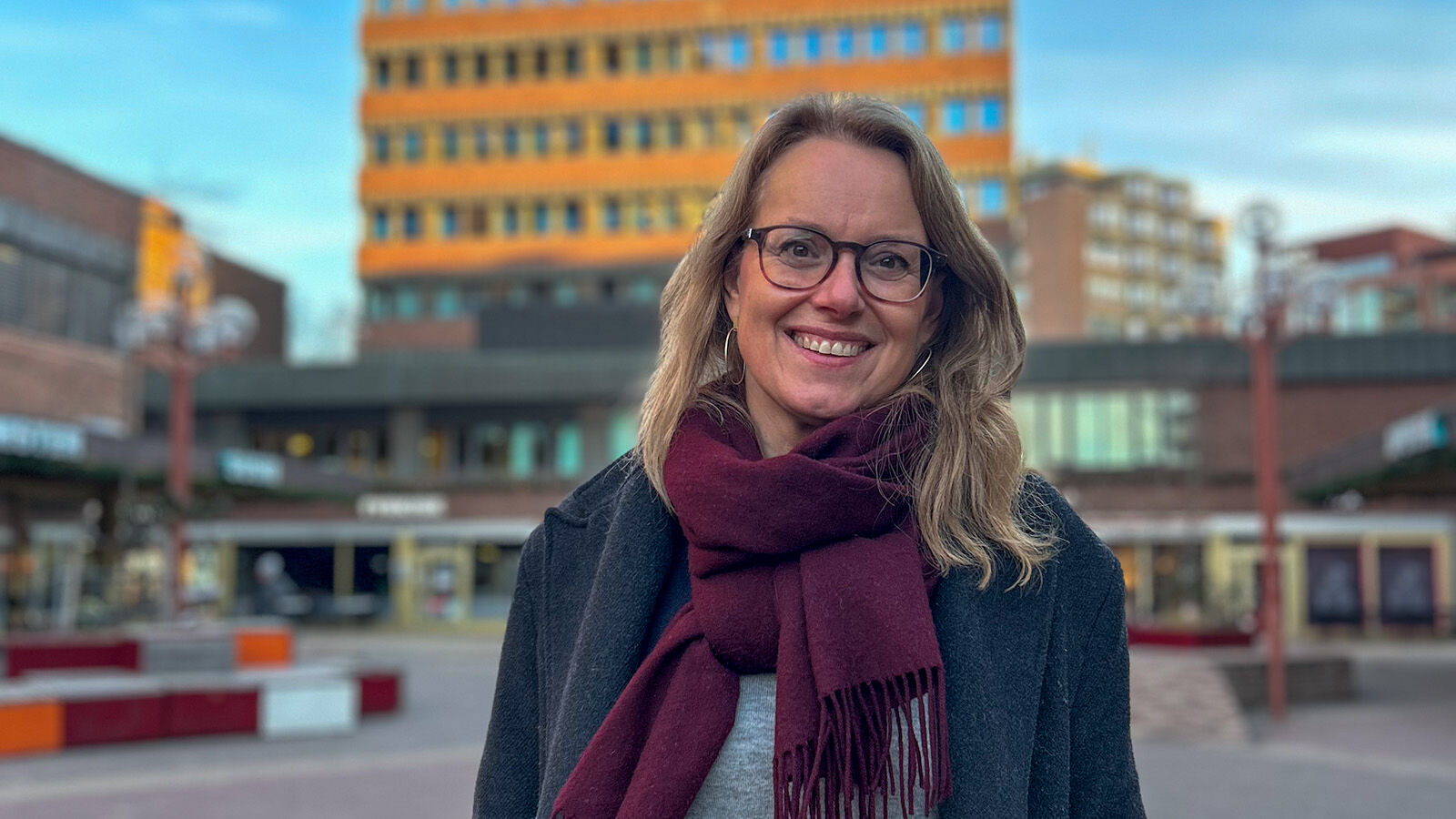
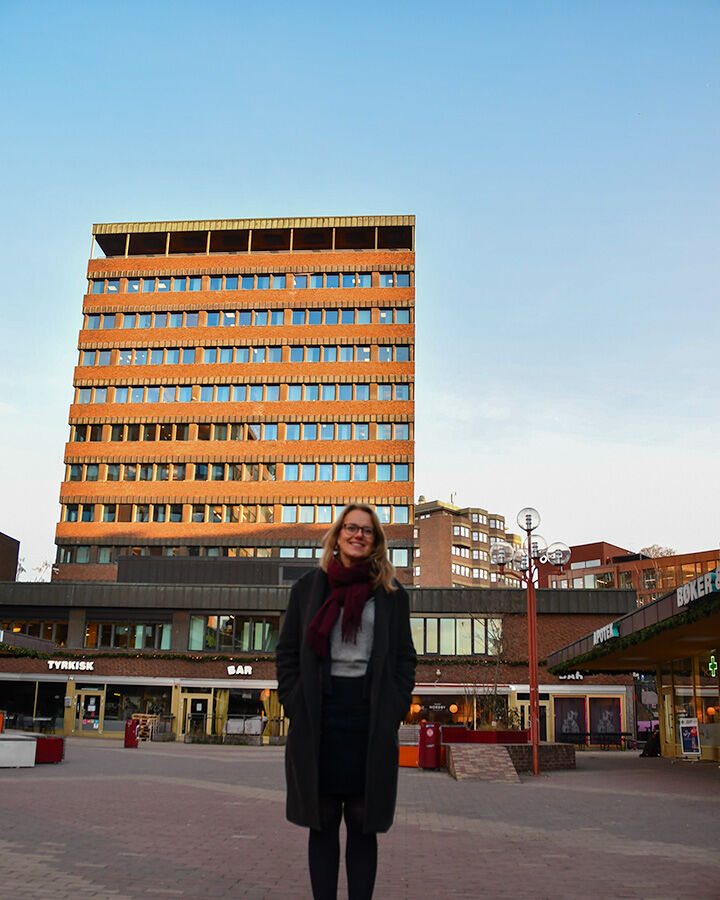
In the neighborhood of Tøyen, Cathrine points to her office at the top of the building. From there, with a view over Oslo, she works as a researcher at the Nordic Institute for Studies in Innovation, Research, and Education (NIFU).
"I had already decided that I wanted to work on initiatives, preferably ones that promote good health. My goal was not just to study a phenomenon, but to contribute to actual change," she explains.
That is precisely what she feels she has achieved at a research institute like NIFU.

Research on the Long-Term Effects of COVID-19
For instance, Cathrine explores the interdisciplinary topic of how public health and mastering life skills are interpreted and applied in schools.
Currently, she is also studying the long-term effects of the COVID-19 pandemic on middle school students.
Sitting in a bakery just below her office building, she takes a moment to talk with us about her journey as a PhD-fellow to her career at NIFU and why she believes a PhD from NIH equips candidates with significant strengths for their professional lives.
Starting a PhD After Years in the Workforce
Cathrine Pedersen had a clear direction when she started her PhD at NIH.
She already had a master’s degree in psychology and had been working for several years.
In recent years, she worked on leadership development at the Norwegian Postal Service. The organization launched a major project to promote better health-initiatives in the workplace.
Cathrine saw an opportunity to carry out a larger project where she could contribute to health and lifestyle changes for employees.
Eventually, an industrial PhD took shape, with the Research Council of Norway funding 50% of the project and with Cathrine finding a suitable institution to partner with.
"The project was focused on physical activity and the motivation for change, and in hindsight, I see that NIH was absolutely the best choice."
Read more about the PhD-program at NIH.
Postal Employees had Low Heart Rates
The study gathered 202 postal workers, drivers, and terminal staff for testing before and after a four-month training program. Seventy percent of the group was well below the activity levels recommended by Norwegian health authorities.
Cathrine discovered that, despite having physical jobs, the participants did not push themselves enough to elevate their heart rates.
The solution was to create a program where employees were supported in engaging in physical activity during their free time, on their own terms.
A year later, the proportion of participants who did not meet the activity recommendations had dropped to 47%.
"I was fortunate to know the Postal Service and the target group well. It made it easier for me to understand what would work for that group," she explains.
Straight into Research After Her PhD
Cathrine was fortunate to transition directly from PhD-fellow to a researcher after her defense. NIFU was looking specifically for a someone with experience in intervention studies and the randomized, controlled trial skills she had gained during her time at NIH.
At NIFU, projects range from assignments for the Norwegian Research Council and EU projects to public sector commissions, such as from the Norwegian Directorate for Higher Education and Skills and the Oslo Board of Education.
"This mix of different projects and clients is something I find truly exciting."
She typically works on five to seven projects simultaneously. A project usually lasts for about a year, but can extend up to four years. Additionally, a significant portion of her time is spent writing grant applications.
"You have to stay alert for new funding opportunities to secure future income. At times, this can take up about 20% of your time," Cathrine explains.
Studying Active Travel to School
Cathrine finds this type of research particularly fulfilling, as it demonstrates how one’s work can have a tangible impact on society.
"It’s especially rewarding when your research informs policy decisions by authorities such as the Ministry of Education or the Directorate of Education. It’s satisfying to know that what you do truly matters."
One example of a project Cathrine contributed to is "Pulse," which was funded by the Research Council of Norway. The project investigated active school transport to and from middle schools and high schools.
She participated in an intervention study that developed an educational program in schools, based on the theory of self-determination, to encourage students to change their attitudes and behaviors towards active travel.
"That project felt like a perfect fit for me, tying together my master’s degree in psychology and my PhD from NIH," she says with a smile.
Multidisplinary Collaboration
At the institute, Cathrine works with researchers from diverse academic backgrounds. While the overarching theme is shared, the data collection methods are interdisciplinary.
She shares an example from a project evaluating norms for student-teacher ratios, commissioned by the Directorate of Education.
"We analyze it from an economic resource allocation perspective, which requires an economist. We also examine its impact on pedagogical practices, which involves educators. And we study how it affects student-teacher relationships, where I contribute as a psychologist," she explains.
Cathrine believes that completing a PhD equips individuals with knowledge and enthusiasm that are invaluable in the workforce.
"Perhaps you train a kind of curiosity and engagement during a PhD. It’s not just about acquiring factual knowledge but about developing a fascination with a field. When I interview people with PhDs, I’m struck by how passionate they are about their projects. This enthusiasm is vital in contract research."
As she reflects over her coffee, she concludes, "I think this engagement is something you develop. It’s not just a trait, but rather a skill or a muscle you can train."