
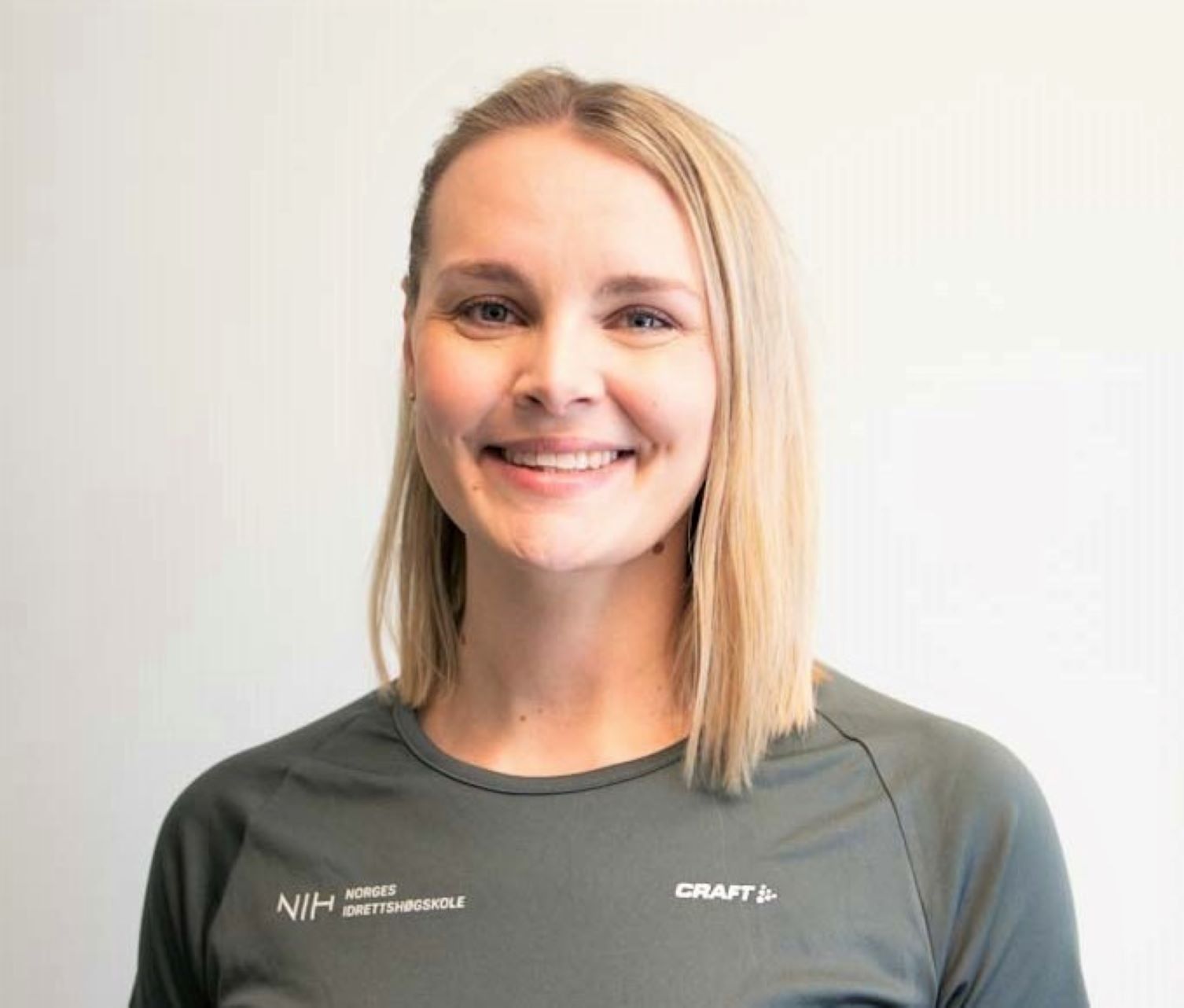
- Linn Christin Risvang is a PhD candidate at the Department of Physical Performance.
- On June 6th, she will defend her dissertation: "From Risk to Response: Musculoskeletal Health of Wheelchair Users and Benefits of High-load Resistance Training: Results from the ‘BoneWheel’ Study"
- Read the dissertation on NVA.no
- Learn more about the project: Health effects of exercise and nutrition in wheelchair users.
- Watch the defense live on NIH's YouTube channel.
About the study
Wheelchair users who minimally ambulate are at risk of low bone mass due to reduced mechanical loading of the skeleton. Loading strategies in the re- and habilitation setting have not been reported to be successful in increasing bone mass.
Our previous work found that participating in ball sports may be beneficial for the bone mass of the lumbar spine, and from studies in ambulatory populations, heavy strength training is recommended to increase bone mass.
This doctoral work examined the skeletal health of adults who predominantly use wheelchairs for mobility.
The project entailed two studies: one cross-sectional assessment of the bone health status of Norwegian wheelchair users, comparing those who participate in sports of low and high impact to those who did not, and a randomised controlled multi-centre study aiming to increase osteogenic stimulus on the skeleton via heavy upper body strength training three times per week over 24 weeks.
Participants were instructed 1:1 for the first 4 weeks of the intervention and then continued training in conventional local fitness clubs on their own. They were monitored digitally and attended physical follow-up sessions monthly throughout the study. The intervention included nutrition optimisation with vitamin D and calcium supplements, key nutrients in bone metabolism. The intervention group was compared to a nutrition-only group.
In addition to assessing changes in bone mineral density, changes in blood markers of bone metabolism, nutritional and hormonal status, body composition, and maximal muscle strength were investigated.
Results
Study I:
- About 80% of Norwegian wheelchair users presented with low bone mass at the hip region. Consequently, many are at risk of osteoporosis and fragility fractures.
- No clear differences were found between those who had participated in organised sports for more than one year compared to those who had not, nor were there significant differences between low- and high-impact sports and exercise activities. However, the large variation in the loading patterns in the represented sports, as well as other confounding factors, may have disguised certain sports’ benefits to bone health.
- The findings also show, not surprisingly, that those who have some ambulatory ability have higher bone mass than those without ambulatory ability.
Study II:
- No change in bone mass was found after 6 months of heavy strength training and dietary supplements, raising questions about the chosen exercise's ability to stimulate the bone remodelling process, study duration, and participants' adherence to the intervention.
- Bone metabolism markers showed a shift towards greater bone remodelling; however, this was not translated to the bone mass measurements. It is unknown whether this is an early sign of material changes in the bone or a transient shift due to the exercise performed.
- Significant improvements were seen in maximal muscle strength (12-22%) and arm lean mass (4%) with the training intervention. The effects were mostly attained in the first half of the study. This may imply study participation fatigue, as the lack of strength improvements in the second half of the study corresponds to lower-than-expected training volume over this period.
- Overall, the intervention was attainable for most participants, and the study shows that wheelchair users can safely perform heavy strength training in a commercial fitness club environment.
Program
- 10:15–11:00: Trial lecture: "Why do exercise interventions that work in the laboratory often fail to translate into population-level success, and what strategies can improve this translation?"
- 13:00–16:00: Defense of the dissertation: "Musculoskeletal Health of Wheelchair Users and Benefits of High-load Resistance Training – Results from the 'BoneWheel' Study"
Committee
Chair:
Professor Lene Annette Hagen Haakstad, Norwegian School of Sport Sciences
Opponents:
Professor Craig Sale, Manchester Metropolitan University, UK
Professor Victoria Louise Tolfrey, Loughborough University, UK
Main Supervisor: Kristin Lundanes Jonvik
Co-supervisor: Truls Raastad, NIH and Vegard Strøm, Sunnaas Rehabiliation Hospital.
Practical information
The defense will be chaired by:
Rector Aage Radmann
The defense is open to all and will be streamed on NIH's YouTube channel.