
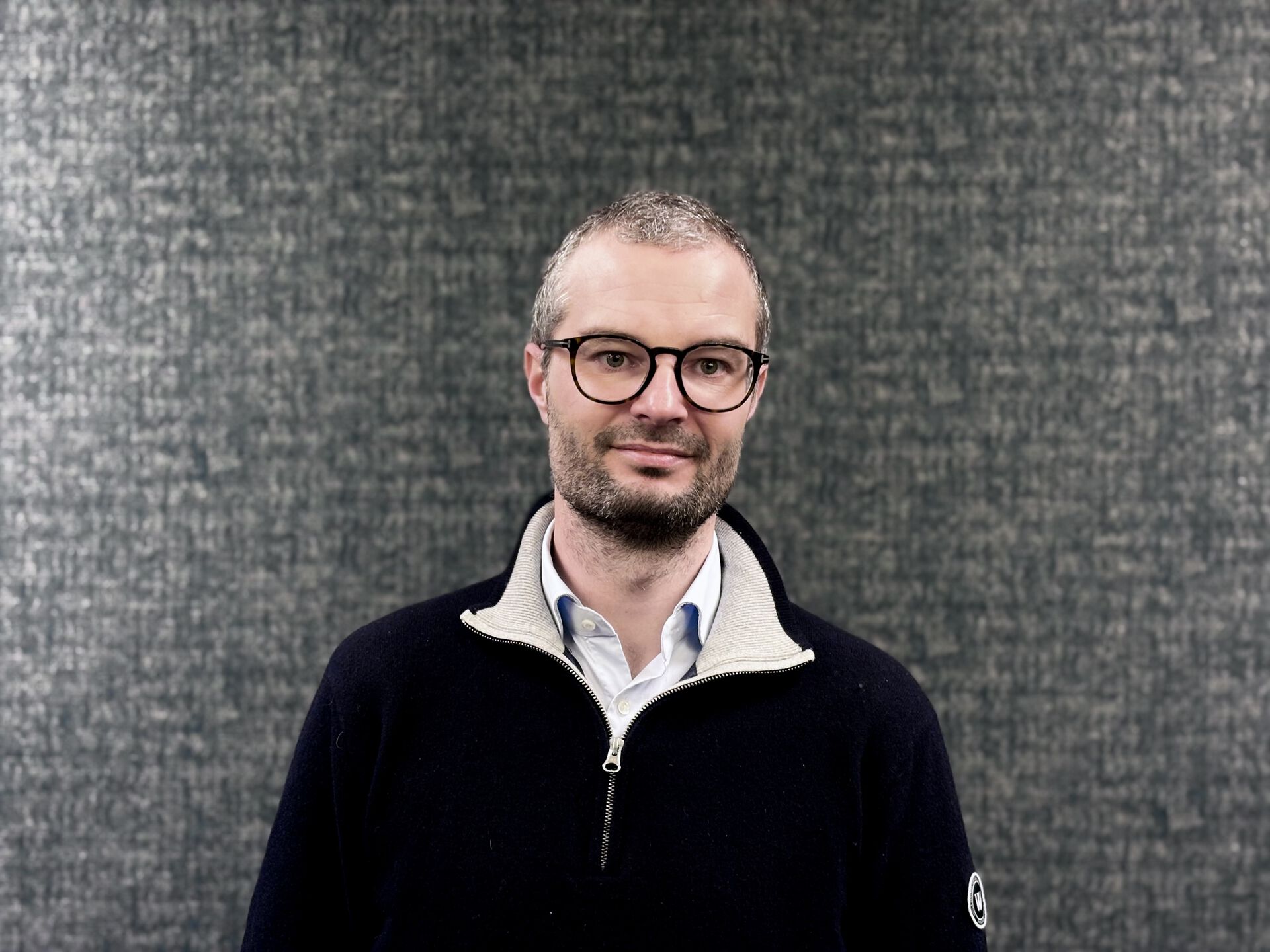
- Christian Magelssen is a research fellow at the Department of Physical Performance.
- On December 19, he will defend his thesis: "Improving teaching and movement strategies for skill learning and performance in skilled and elite alpine ski racers".
- Read the full dissertation here
- Watch the defense live on NIH's YouTube channel.
About the Study
This doctoral dissertation takes an interdisciplinary approach to understanding skill learning, using alpine skiing as a test platform. By combining mechanics and psychology, the study has explored learning strategies and techniques that can enhance the performance of skilled alpine skiers.
From a mechanical perspective, the study has explored the most effective strategies for skiing fast in slalom, and what kinematic signature makes certain strategies so effective. This has involved analyzing skiers' positions in the slalom course, as well as changes in their speed and movement.
From a psychological perspective, the study has examined whether skiers can learn better by using contextual interference to train learning tasks, a learning principle that involves varying the order of training tasks to improve learning. Additionally, the study has explored whether reinforcement learning is more effective for instruction and feedback than traditional instruction-based learning.
Results
The results of the study show that skiers, on average, achieved the fastest times using the "stretch and push skis forward" strategy. This is a technique where the skier actively stretches their body and pushes the skis forward to gain higher speed.
The study found no compelling evidence that training with greater contextual interference increased skill learning. This means that variation in the order of training tasks did not necessarily improve learning outcomes.
However, it was found that reinforcement learning, where athletes learn through evaluation and feedback, was an effective signal for training athletes to make good strategic choices. Overall, the findings from this dissertation highlight that an interdisciplinary approach can be an effective strategy for studying skill learning in elite athletes.
Practical info
- 09.00: Trial lecture: “The Neural Basis of Motor Skill Learning”
- 11.30-14.30: Defense of the thesis: "Improving teaching and movement strategies for skill learning and performance in skilled and elite alpine ski racers"
The defense is open to the public and will be streamed on NIH's YouTube channel.
Committee
Chair
- Anne Marte Pensgaard, Professor, Norwegian School of Sport Sciences
Opponents
- Professor Joseph Galea, Professor of Motor Neuroscience, Head of Research School of Psychology, University of Birmingham, UK.
- Associate professor Keith Lohse, Washington University School of Medicine, USA
Supervisors
Main supervisor
- Matthias Gilgien
Co-supervisors
- Robert Reid, Sports Director, Norwegian Ski Federation
- Romy Froemer, Assistant professor, School of Psychology, University of Birmingham
The defense will be led by
Rector Lars Tore Ronglan