
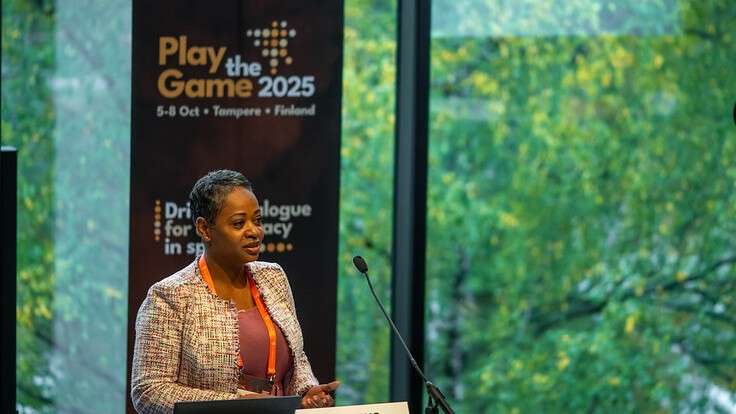
I’m pretty sure I’m the first Jamaican to do a PhD at the Norwegian School of Sport Sciences (NIH). I say that because every time I tell someone I’m from Jamaica, they ask:
“How on earth did you end up in Norway???”
A valid question, considering the vastly different climates and cultures, but the answer is simple: sport. Safe sport, to be exact, which has been a large part of my career so far.
Building a Career in Sports: My Jamaican Roots
I have been involved in sports in almost every capacity for several decades. A former collegiate and professional tennis player, national tennis coach, and national sport psychology consultant, I was well-entrenched in the Jamaican sporting world before taking my talents internationally to the Athletics Integrity Unit (AIU) in Monaco.
At the AIU, I had the chance to do research and investigations across a wide range of integrity issues in athletics, like age manipulation, sports trafficking, and safeguarding. What immediately stood out to me was the common thread throughout these issues – athlete vulnerabilities and the lack of proper protection. As I got deeper into my work, the safeguarding challenges became more apparent, and I wanted to do more research in that area. This led me to my next move, the Doctoral Training Network in Sport Ethics and Integrity (DAiSI) project at NIH.
Yes, I left the luxurious principality of Monaco and the temperate South of France climate for the freezing polar winters of Oslo to do a PhD, because it was in an area I thought was necessary, and it would be impactful.
Making Safe Sport Policies Work Locally
My project has a very wordy and complicated title, “Local Anchoring of Safe Sport Policies on Transnational Sport for Development Collaborations”, but the focus is simple: how to make international safe sport policies more culturally specific and relevant so that they actually work. Specifically, we are looking at the safe sport policies being introduced in sport for development programs in Southern Africa.
Sport for development programs use sport to create positive social change, helping people build life skills, stay healthy, and connect with others. But sometimes that positive work is overshadowed by safety concerns, where participants experience abuse, harassment, or exploitation. Internationally, safe sport policies have been developed to address these issues and make sport safer for everyone. However, these policies are only effective when they make sense for the communities using them.
About
Kadija Richards is a PhD Fellow at NIH with the Deptartment of Sport and Social Sciences, pursuing a joint degree with KU Leuven in Belgium.
She is part of the Doctoral Training Network in Sport Ethics and Integrity (DAiSI).
For more information about Kadija and her work, follow her on LinkedIn @Kadija-A-Richards.
Many safe sport guidelines have been developed in countries in Europe and North America (the Global North) and are based on particular ideas about human rights and safety. However, in many Global South contexts, like Southern Africa, people may understand safety differently, and these perspectives can determine how communities respond to conflict, harm, and protection concerns.
My research is considering if and how international standards can be adapted and applied in local sport for development settings in Southern Africa. To do this, we need a better understanding of the local culture and social climate that influence people’s ideas of harmful behaviour in sport and how they respond. By looking at the perspectives of both the Global North partners and Southern African partners involved in these sport for development partnerships, we are able to see where their views are similar and where they differ. This helps us to understand why some policies and approaches work, why some don’t, and what kind of adjustments need to be made to make them more effective in those communities.
Challenges in Adapting Global Policies to Local Contexts
In many cases, because the funding comes from the Global North organisations, they have the final say when making decisions about how policies are developed and implemented in the local contexts. So far, we have seen that some parts of the safe sport policies have been more easily accepted than others. For example, policies relating to child protection and women's rights have generally received strong support. Other policy areas, such as disciplinary measures like spanking or those concerning LGBTQIA+ rights, have been a little more challenging to manage. This is often due to the local social norms, cultural values and laws. Working around these differences can be difficult, especially with the power imbalances in these sport for development partnerships.
The Value of Local Knowledge in Safe Sport
Firstly, it shows us the value of focusing on local knowledge and experiences in developing safe sport policies in sport for development programs. This helps to ensure that the policies reflect the realities and dynamics of the communities being served, so that they are practical and meaningful in everyday settings. It also highlights the importance of recognising the local partners as equal in the policy development process. With more power to shape safe sport policies based on their own challenges, customs, and laws, there will be greater acceptance from the communities and more effective outcomes.
In essence, the goal is to help sport for development programs create safe sport policies that are locally informed, culturally relevant, and specific to the needs of their communities, so that people can participate in sport safely no matter where they are or where they are from.
Life in Norway: More Than Just Research
So was it worth the move from Jamaica to Monaco to Norway?
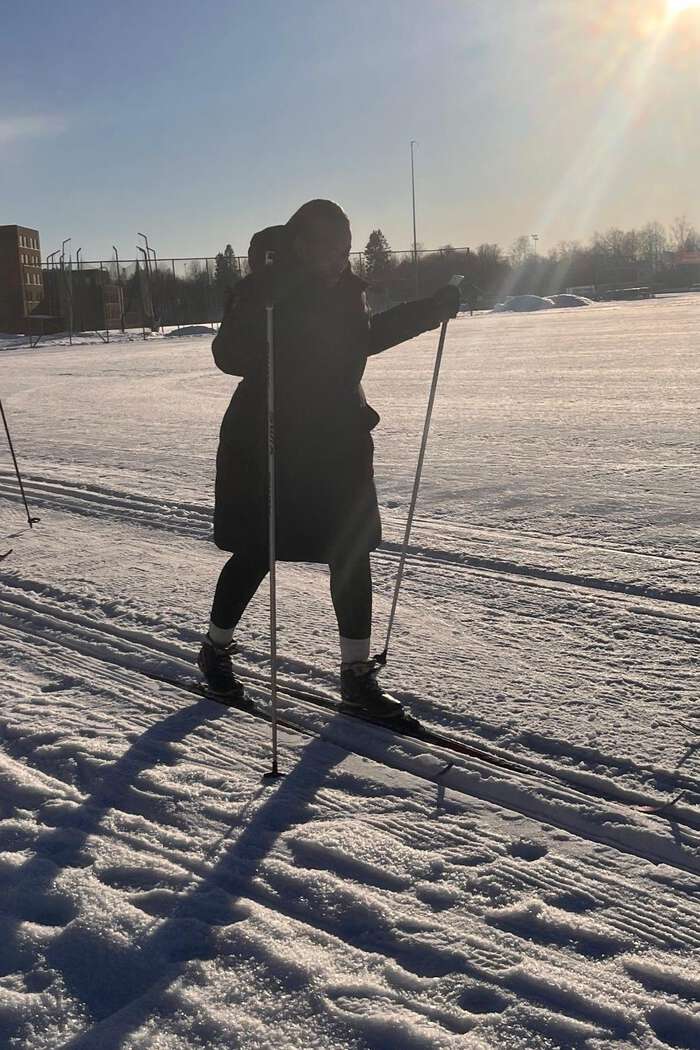
Besides being the coldest I have ever been in my life (-22C…yikes!), I would say yes. My research is already highlighting the knowledge and practice gaps in safe sport policy development and bringing much-needed attention to Global South countries and regions that are often overlooked in these processes. I have been able to share my findings and recommendations in several international conferences and have had some of research published in an international academic journal.
I consider myself lucky to have a professional interest that gives me the opportunity to travel and learn so much about the world, and these experiences have brought a lot of value to my work. Even though my current research is focused on Southern Africa, the lessons learned about understanding local cultures and promoting local voices and expertise can be applied in any setting, to make sport safe for everyone…everywhere.
Not only is my work interesting and meaningful, I have also been fortunate enough to have very kind and supportive colleagues, which has made my transition much easier than I anticipated. I really appreciate the Norwegian focus on wellness, both mentally and physically, and the proximity to nature no matter where you are in the city. I have been pleasantly surprised by how diverse Oslo is, and the variety of tasty food options there are…including Jamaican food!
Outside of all the events and activities organized by the university, I have also been to concerts, comedy shows, art classes, dance classes, karaoke, music clubs and sporting events.
Unfortunately, the only Norwegian I’ve learned so far is, “tusen takk”, and I still haven’t done the sauna-fjord dance yet, but I have tried the most Norwegian thing I can think of, cross-country skiing…and I only fell once.
Next on the list: brown cheese.