

Abstract
Nature-based tourism (NBT) is a powerful a force for environmental and social change and is embedded deeply within the climate crisis. NBT is a dynamic, fast growing and dispersed industry, one in which individual desires for experiences are co-produced from deep-seated human needs and facilitated by an active industry of marketing and narrative-creation in which imagery is readily “inspired by” (or appropriated from) nature.
The rate of growth in Norwegian nature recreation areas is unprecedented and surpasses the 2019 pre-pandemic levels by over 12 percent according to the UNWTO. With this growth comes consequences for the nature governance of recreation areas, such as national parks, designated under the assumption of dispersed use and free access. One case of this occurs in northwestern Norway, where on brilliant July mornings hundreds of early risers wander about the tussocky landscape, many making their way towards a pearl of destination travel – Kvalvika in Lofoten – to watch the sun make its arc and watch themselves post the day on social media. So begins a steady flow of visitors, with more or less volume as the day progresses, and to the naked eye it would appear that most visitors leave nothing behind from their visit except for traces of shoeprints on paths. But both shoeprints and the trickling in of visitors, like many things in life, is a numbers game.
The sheer quantity of visitors indeed does leave distinct traces on the landscape and in the social fabric of local communities. One remainder of human presence in particular is currently terraforming the land and (re-)constituting human-environment, notions of friluftsliv and individual norms, and place-based relations. This talk focuses on those remainders, in particular group practices and experiences surrounding the biopolitics of the excrement of tourism, and how this gives rise, sometimes, to awkward moments in conservation.
Bio
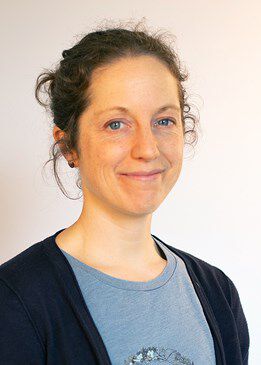 Rose Keller is a research scientist for the Norwegian Institute for Nature Research: Nature and Society Department. She has a primary focus on nature-based tourism in protected areas and has a background in research in academia and as a social scientist in the National Park Service (Alaska) related to acoustic assessments of national parks, visitor management and issues in conservation governance.
She currently leads a national project mapping natural soundscapes and noise in Norwegian national parks (Norwegian Research Council 33243 FRIPRO) and leads the Nordic Soundscapes Research Network (Norwegian Research Council 21464 BIOVIT).