
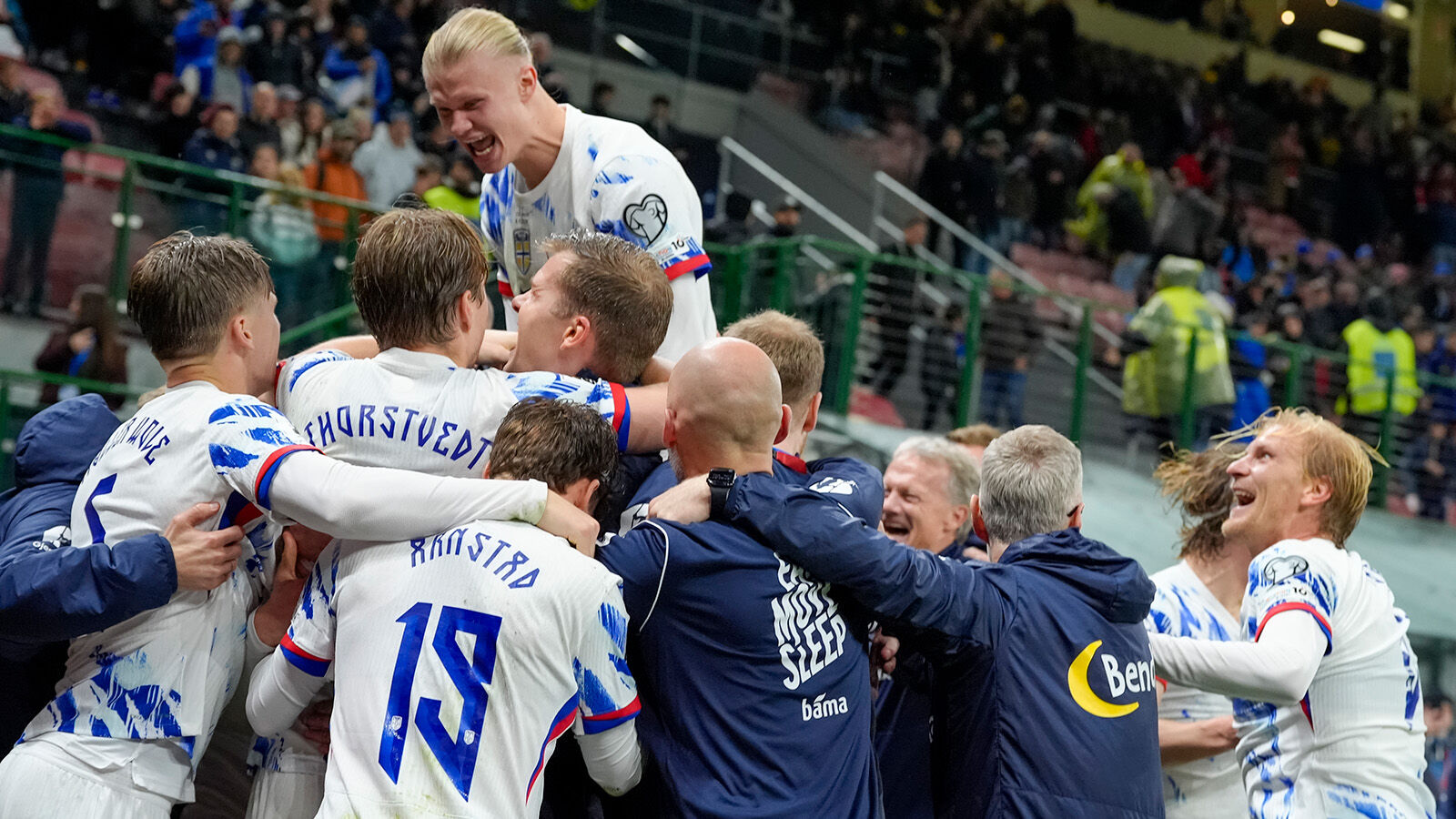
Do you remember when Norway beat Brazil in ’98?
NO—I DON’T REMEMBER THAT!
I don’t even remember them being in a tournament. I was born in a small Norwegian village in 1995 and grew up on a farm with two older brothers.
As a little sister’s desperateness to tag along with her brothers, my only chance was to play football in the garden. The oldest was Oliver Kahn, the goalkeeper, and the middle one was Cristiano Ronaldo.
It ended with me playing organized football, committing to the sport, attending the Norwegian high school of Elite Sports, and then moving to Miami for college soccer.
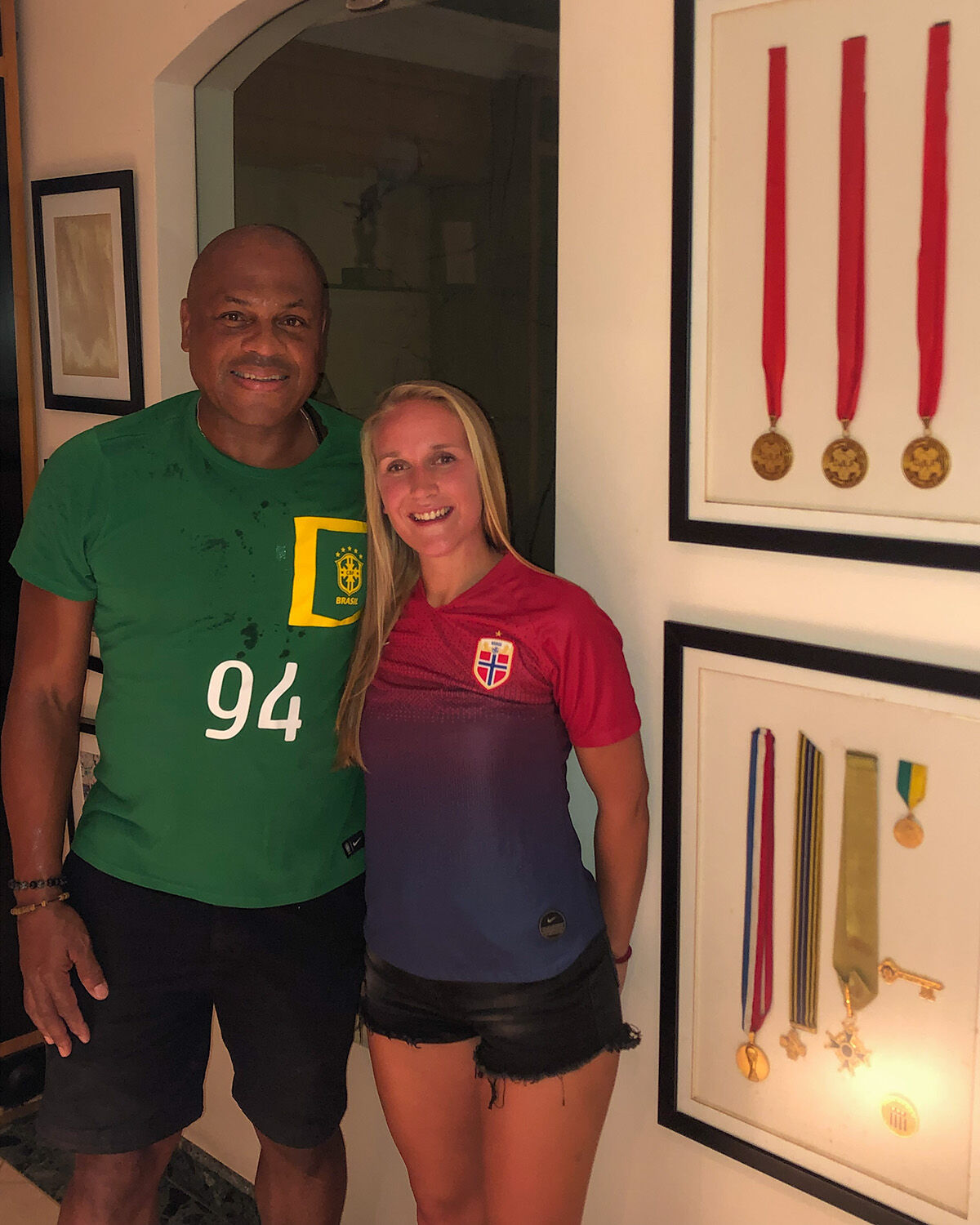
There I was lucky to meet many fellow students from all over the world – including Ronaldo (of course from Brazil).
Ronaldo’s father is also named Ronaldo – and he’s not just any Ronaldo. He’s Ronaldo Rodrigues de Jesus.
He was in the squad when Brazil won the World Cup in ’94 and is better known as Ronaldão. He also played a friendly in Norway against Rosenborg in 1997 while he played for Santos.
Together with an Italian friend, we visited them before the pandemic broke out in 2020.
Why hasn’t Norway qualified for a World Cup earlier?
Isn’t it sad that the biggest thing Norway has done in modern times is winning a group-stage match against Brazil in ’98!? I cried out in frustration to the Brazilians.
But why is that? Haven’t you had many good players? they replied, mentioning names like John Arne Riise, John Carew, Ole Gunnar Solskjær, and so on.
Yes, why was it like that? For fifteen years I walked around with belief and hope, only to be knocked down and disappointed every single time.
You have to stop believing, Ingrid, a friend told me a few years ago. She couldn’t understand how I could keep getting so disappointed every time. I was close to taking her advice after the Euro qualifier against Scotland in 2023. But here we are – and now we’re going to the World Cup. What’s different this time?
“There are no idiots on the team.”
That’s what Aleksander Sørloth said earlier this fall. I think part of the answer lies there. Not necessarily that there are no idiots on the national team – because I think we can all be idiots now and then – but in the way they relate to each other. The togetherness in the squad also seems unique compared with the years I’ve watched the national team.
Communication, unity, and leadership
With big names in the Norwegian squad, there could easily have been potential for new conflicts – like in the early 2000s, when John Arne Riise and John Carew clashed on the team bus.
Now it seems the players genuinely want the best for each other. Friction on a team is probably unavoidable, but how those moments are handled is what separates truly great teams from the rest.
Beyond the obvious factors like strong individual skills and good players, this national team seems to have something extra compared with previous generations.
Besides being a football fan, I’ve been lucky enough to work on a PhD about nonverbal communication in elite football.
And I think we can find some more answers here as to why this national team is so good.
Encouragement, demands, leadership, and sacrifice
During Norway’s international matches, we see a lot of encouragement for good efforts—for example, through clapping or a supportive pat on the shoulder. We see Ødegaard directing those around him and asking for the ball – a clear sign of leadership, as the captain he is. And when he’s not fit to play, he’s still present, offering support to his teammates.
Kristoffer Ajer pointed out this fall how the squad has gotten better at holding each other accountable. This suggests strong routines around negative body language. To me, it seems like a crucial code for any team to crack – teams with clear values and rules about when and how it’s okay to point out that something isn’t good enough. As Ajer mentioned, giving clear feedback to each other with the knowledge that they care for each other, seems important.
We also see strong examples of handling personal setbacks for the sake of the team. Take Leo Skiri Østigaard, who has been honest about how difficult it was to lose his spot in the starting eleven, yet still manages to support those who are playing.
To me, this is perhaps one of the most important signs that the team comes first – something that will be crucial going into and during a tournament.
Looking ahead, it’s about how Solbakken and the squad can best prepare for the men’s national team’s first tournament in over 25 years.
For me, it’s about seeing my country take part in football’s biggest stage – no matter the outcome. And if all the stars align, maybe Norway will get a new group-stage match against Brazil, in my second hometown, Miami.
And who knows, maybe I’ll be able to have my own memory of Norway beating Brazil.