
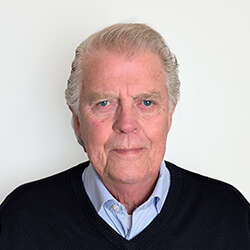

Background and experience
Gunnar Breivik is Professor Emeritus in the Social Sciences at the Department of Sport and Social Sciences. He completed intermediate studies in philosophy at the University of Oslo in 1968 and received the degree of Cand.theol. from the Norwegian School of Theology (MF) in 1969. Following a research scholarship from MF in the spring of 1970, he was awarded a scholarship from the Deutscher Akademischer Austauschdienst (DAAD) in 1971–1972 for doctoral studies in philosophy at Eberhard Karls University of Tübingen, Germany. He subsequently completed the two-year specialist teacher education program at the Norwegian School of Sport Sciences (NIH) from 1971 to 1973 and earned his Master’s degree (Hovedfag) in Sport Sciences there in 1975 with a thesis in the philosophy of sport.
Breivik was appointed Head of the Outdoor Recreation Section (Friluftsliv) at the Norwegian School of Sport Sciences in the autumn of 1975. Following a two-year research fellowship focusing on Sport and Society (1981–1983), he was appointed Professor in the Social Sciences at NIH in 1985. In 1981, he spent a year at the University of California, Berkeley, as a Fulbright Fellow in philosophy.
Breivik has held numerous leadership and administrative positions at NIH, including Head of Section, Head of Department, Institute Director, and Chair of various committees and boards. He served as Rector (President) of the Norwegian School of Sport Sciences from 1999 to 2005. During the 1990s, he chaired for several years the Program for Sport Research under the Norwegian Research Council for Science and the Humanities (NAVF). He has participated in and led several research projects, including Adaptation to High-Stress Situations, Learning Under Risk, Sport–Values–Society, Physical Activity in the Norwegian Population, and Doping and Human Enhancement.
Research
Breivik has published numerous books and scientific articles in both Norwegian and English. His research spans a broad range of topics, including: Risk-taking in sport and in the general population, Physical activity patterns in the general population, Characteristics of elite sport careers, Ethical dilemmas in sport, Friluftsliv (outdoor recreation) and deep ecological perspectives, Phenomenological approaches to sporting actions, Doping and human enhancement, The role of skill in sport